To prepare for an office cleanout, make a clear removal plan, protect private data, sort items, and tell employees what to expect. Mark work areas, clear paths, and confirm the pickup time before the crew arrives. These steps help offices in Rohnert Park remove furniture, electronics, and junk without stopping daily work.
Table of Contents
- How should you plan an office cleanout?
- What should you remove before the cleanout begins?
- How can you protect sensitive business information?
- How do you keep employees productive during an office cleanout?
- What should you know before scheduling commercial junk removal?
- How can you prepare an office for the removal crew?
- What should you do after the office cleanout is complete?
- Key takeaways
- Frequently Asked Questions
- Conclusion
How should you plan an office cleanout?
A good office cleanout starts with a simple plan. Decide what must leave, when work can happen, and who will lead each task. This helps prevent rushed choices and keeps normal business work moving.
Set clear goals, priorities, and deadlines
Walk through the whole office first. Include private offices, open work areas, storage rooms, break rooms, reception areas, and loading spaces. List large items, such as desks and tables, along with small items, such as lamps, bins, and old supplies.
Separate urgent work from work that can wait. A property manager may need an empty suite before a new tenant arrives. A business owner may only need old cubicles gone before a remodel. Clear goals help the team choose a useful deadline.
A basic plan can include:
- The rooms and storage areas included in the project
- The furniture, electronics, and debris that must leave
- Items that will be reused, donated, recycled, or discarded
- The date when the space must be ready
- The person who will approve final removal choices
Check the lease before moving anything. Some buildings have rules for loading docks, elevators, waste areas, and after-hours work. Rohnert Park CA Junk Removal can help business owners and property managers think through the plan before work begins.
Assign responsibilities to the right team members
Choose one person to lead the project. That person can answer questions, approve uncertain items, and work with building staff. Other workers can label furniture, gather records, or prepare electronics.
Give every task an owner. A shared document or printed checklist can show what is done and what still needs attention. This helps when many departments use the same office.
What should you remove before the cleanout begins?
Before the cleanout starts, identify unwanted furniture, equipment, supplies, and general office junk. Separate useful items from items that need removal. Sorting first saves time and lowers the chance of losing important property.
Identify desks, cubicles, furniture, and general office junk
Walk through the space with a paper checklist or phone. Mark desks, chairs, cubicle panels, filing cabinets, shelves, tables, reception furniture, and damaged fixtures. Check closets and storage rooms too. Boxes, worn carpet pieces, broken fans, and old signs can add up quickly.
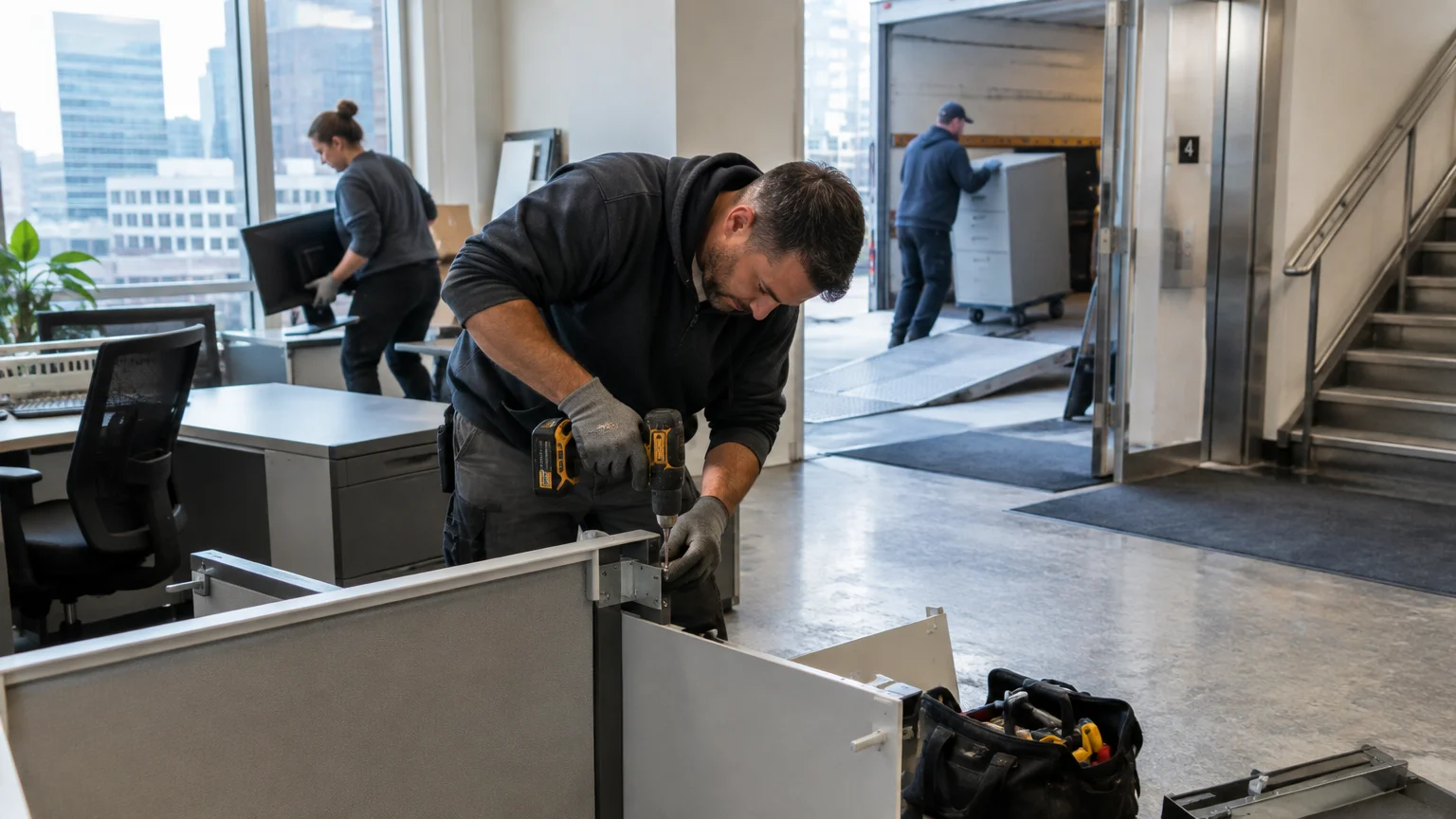
Large furniture may need partial disassembly. Do not take items apart unless someone can do it safely. Heavy cabinets and awkward desks can hurt workers or damage walls, doors, and floors.
The list may also include:
- Broken office chairs and unused desks
- Old cubicle panels and workstations
- Shelving, cabinets, and conference furniture
- Damaged appliances from break rooms
- Cardboard, packing material, and loose debris
- Outdated equipment the business no longer needs
A cleanout service removes unwanted items from a property. It then sends items toward reuse, recycling, donation, or disposal. Ask what the provider accepts before setting the appointment.
Separate items for reuse, recycling, donation, or disposal
Create marked areas for items that will stay and items that will go. Reusable desks or chairs may help another department. Working furniture may also suit a nonprofit or another local group. Keep unusable items apart from materials needing special handling.
Appliances need care as well. A refrigerator, microwave, or water cooler may contain parts that should not enter regular trash. Businesses wondering how to dispose of appliances should check local rules and provider policies. The same applies when deciding how to get rid of a fridge or another large appliance.
Do not place paint, chemicals, pressurized containers, medical waste, or other regulated materials with office junk. Ask the proper local authority or a qualified handler about these items. This keeps employees, building staff, and the crew safer.
How can you protect sensitive business information?
Protect sensitive information before any office cleanout begins. Paper records, computers, storage devices, and labels can reveal private details after a business stops using them. A removal plan should cover data protection, not only furniture removal.
Handle paper records and confidential materials securely
Review file cabinets, desks, drawers, printers, and storage boxes. Remove records that must stay, then follow the company’s record policy for the rest. Customer details, employee information, financial data, passwords, and legal records need special care.
A regular office cleanout is not the same as certified document destruction. If records need shredding or another secure process, use a provider that clearly offers it. Never leave private papers in an open hall, shared waste room, or unlocked loading area.
Check whiteboards, bulletin boards, labels, and notes before removal. They may contain passwords, phone numbers, project names, or customer details. Erase private information and remove labels from boxes, computers, and filing cabinets.
Prepare computers, hard drives, and other electronics for removal
The technology team should handle computers and storage devices. It can back up needed files, remove accounts, sign out of services, and follow the company’s data-wiping policy. Simple deletion may not remove all data from a hard drive.
Electronics include monitors, printers, phones, routers, cables, servers, and battery-powered devices. Keep these items in a separate area. Electronic waste may need recycling through a proper program instead of regular disposal. The Environmental Protection Agency gives guidance on responsible reuse, repair, and recycling through its electronics donation and recycling guidance.
The removal crew should not decide whether a computer still has company data. That choice belongs to the business. After the technology team signs off, list the items for removal.
How do you keep employees productive during an office cleanout?
Employees stay more productive when they know what will happen and when. A short message should explain the schedule, affected areas, safety rules, and work changes. Clear notice lowers questions and keeps staff away from active removal zones.
Create a clear communication plan for your team
Send the first notice early. Give employees time to save files, remove personal items, and prepare their desks. Explain which items belong to the company and which items employees must take home. Send a final reminder before work starts.
The message should include the date, work areas, access limits, and project lead. Employees should know where to report problems. They should also know not to move heavy furniture or enter marked work areas without permission.
Managers can use this checklist:
- Tell employees which rooms will close and when
- Ask staff to remove personal items before the deadline
- Explain where temporary work areas will be located
- Share rules for elevators, halls, and loading zones
- Give staff one contact for cleanout questions
Use phased scheduling, temporary work areas, or remote work
A phased cleanout handles one area at a time. This works well when the office must stay open. The team might clear storage rooms first, then unused offices, and then shared work areas. This keeps more desks available.
Temporary work areas can help employees whose desks are being removed. Remote work may also help during a large move, remodel, or building change. The best choice depends on the business, building, and type of work.
Rohnert Park CA Junk Removal can help Rohnert Park businesses plan a removal window that fits the site. The business should make the final choice based on staff needs, customer access, security, and building rules.
What should you know before scheduling commercial junk removal?
Before scheduling commercial junk removal, document the items, access points, and site conditions. Good details help the provider understand the job and reduce delays. The plan should also follow the property’s rules.
Document the items, access points, and site conditions
Make an inventory of everything that needs to leave. Include the size and number of large pieces, the amount of loose debris, and items needing special handling. Photos can show tight corners, stairs, elevators, narrow doors, or long paths to the loading area.
Note whether the crew must work inside an occupied building. Identify floor protection needs, security desks, parking limits, and restricted areas. In a multi-tenant property, building staff may need notice ahead of time.
Good details include:
- The floor or suite where items are located
- Stairs, elevators, ramps, and door widths
- Loading dock rules and vehicle access
- Items needing disassembly or careful handling
- Materials the provider cannot accept
Confirm timing, loading instructions, and property requirements
Confirm the arrival window and expected work order. Decide who will provide access and who can approve changes. Also confirm parking instructions, elevator access, and any loading dock reservation.
Property managers may require proof of insurance, work-hour limits, floor protection, or other papers. Rules vary by building. Get these details before the appointment instead of during the cleanout.
For local service, businesses can review how Rohnert Park CA Junk Removal serves Rohnert Park, including Country Club Village, SOMO Village, Cotati, Santa Rosa, Sebastopol, Windsor, and nearby commercial properties. Clear planning helps the provider arrive ready and limits work delays.
How can you prepare an office for the removal crew?
The office should be ready before the crew arrives. Clear paths, open work zones, and confirmed building access help the removal run smoothly. Employees should stay outside the active work area unless they have a clear task.
Clear pathways, elevators, loading zones, and work areas
Remove boxes, cords, decorations, and loose items from the route. Keep halls and doors open where allowed. Protect items that are staying, especially glass walls, finished floors, displays, and nearby equipment.
Do not block fire exits or safety equipment. The Occupational Safety and Health Administration explains how exit routes should stay free and usable in its emergency exit route information. Follow the building’s safety rules as well.
Mark items that must stay. A bright label or separate room can prevent mistakes. Keep personal property, active equipment, and important records away from the removal area.
Coordinate with property managers, security, and building staff
Building staff should know the date, crew access plan, and areas involved. Security may need a guest list or loading instructions. The property manager may need to unlock service doors or reserve an elevator.
The project lead should stay available during the work. If the crew finds an item that was not on the list, the lead can decide what to do. This keeps employees from making separate choices.
Businesses in California and throughout the Rohnert Park area may face different building rules. Check those rules early to avoid a blocked entrance, missed elevator window, or delay.
What should you do after the office cleanout is complete?
After the cleanout, compare the space with the original plan. A final walk-through helps confirm that the right items left and that the remaining office is safe and ready to use.
Inspect the space and confirm that all planned items were removed
Check every room, closet, cabinet, and storage area. Look behind doors and under work surfaces. Make sure planned desks, cubicles, appliances, electronics, and debris are gone. Check that items marked to stay remain in place.
Look for blocked paths, loose wires, damaged walls, floor marks, or debris left behind. Report damage promptly to the property manager and removal provider. Keep completion notes, photos, or paperwork with the project record.
If the office involved a move or remodel, confirm that the space meets the next project’s needs. An open room may still need repairs, painting, cable work, or deep cleaning.
Organize the remaining office and document the completed cleanout
Return needed furniture and supplies to their planned places. Label storage areas and remove old signs. Update the business asset list so future teams know what remains and where it is kept.
Record what was reused, donated, recycled, or removed. This creates a useful record for the next office change. It also helps the business improve its cleanout process over time.
A final review may reveal related needs, such as appliance disposal, warehouse debris removal, or a future property cleanout. Plan those tasks separately so the current project stays clear.
Key takeaways
- Plan the cleanout first: List rooms, items, deadlines, and team responsibilities.
- Protect private information: Secure paper records, computers, hard drives, and labels.
- Sort items clearly: Separate reusable, recyclable, donated, and disposable materials.
- Protect productivity: Use notices, phased work, temporary areas, or remote work.
- Prepare the building: Confirm access, elevators, loading rules, security, and property needs.
Frequently Asked Questions
What is a cleanout service?
A cleanout service removes unwanted items from a home, office, or commercial property. Items may include furniture, appliances, equipment, boxes, and general debris. The provider may sort materials for reuse, recycling, donation, or disposal. Confirm accepted materials and building rules before scheduling commercial junk removal.
How early should a business plan an office cleanout?
Start planning as soon as the business knows the target date. Larger offices, occupied buildings, and projects with many electronics need more planning. Early work gives employees time to remove personal items and gives property managers time to approve elevators, loading zones, and work hours.
Can a business leave computers and hard drives for removal?
Yes, but the company should prepare them first. The technology team should back up needed files, remove accounts, and follow the approved data-wiping process. A removal provider should not decide whether a device contains private information or is ready for disposal.
How should a business dispose of an old refrigerator or appliance?
Check local rules and the provider’s accepted-material policy first. Refrigerators and other appliances may need special handling because of refrigerants, batteries, or electrical parts. Do not place them in regular office trash unless the proper authority or provider confirms that method.
Can office furniture removal happen while employees are working?
It can, but phased scheduling is often easier for an active office. Clear unused rooms first, then move through shared areas during quieter periods. Barriers, staff notices, and a planned route help protect employees and keep the work organized.
Conclusion
A well-planned office cleanout does not have to interrupt the whole team. Sort items, protect data, share a clear schedule, and prepare the building before removal day. A written plan also helps property managers and removal crews work from the same information.
For help planning an office cleanout, Contact us to discuss your removal needs with Rohnert Park CA Junk Removal.
If you are not sure what you are dealing with, it is worth having someone look at it before it turns into a bigger job. Find out more about our office cleanout in Rohnert Park. Get in touch with Rohnert Park CA Junk Removal today and we will tell you where you stand.